Table of Contents▼
"The Foreign Investment and Technology Transfer Act will be amended to allow repatriation of investment without prior Nepal Rastra Bank approval — notification sufficient."
— Budget §10(b), FY 2083/84
Of all the investment facilitation provisions in the FY 2083/84 budget, the FITTA amendment is generating the most immediate interest from foreign PE/VC funds, DFIs, and legal advisors structuring Nepal entries.
That interest is warranted. The prior NRB approval requirement for repatriation has been the most consistently cited friction point in Nepal's foreign investment architecture — not because approvals were routinely denied, but because the process introduced timing uncertainty that made fund-level return modelling structurally difficult.
But there is a gap between what the budget announces and what changes on the ground. This brief closes that gap.
What the Current Law Actually Says
Under FITTA 2075 (2019) as currently enforced, Section 20 governs repatriation. The framework has several layers:
Layer 1 — The Act: Foreign investors may repatriate profits, dividends, sale proceeds, and royalties "in the same foreign currency in which the investment has been made or other convertible foreign currency with the approval of the Nepal Rastra Bank."
Layer 2 — The NRB Bylaws: The Fifth Amendment to the Foreign Loan and Investment Management Bylaws (issued December 30, 2025) already began delegating repatriation approvals — moving dividend and investment repatriation approvals from NRB headquarters to the Head Offices of A-Class commercial banks, with a processing timeline obligation.
Layer 3 — The Sectoral Overlay: For investments through Specialized Investment Funds (SIFs), SEBON approval — not NRB — governs repatriation. For investments above NPR 6 billion routed through the Investment Board of Nepal, the IBN plays a coordination role.
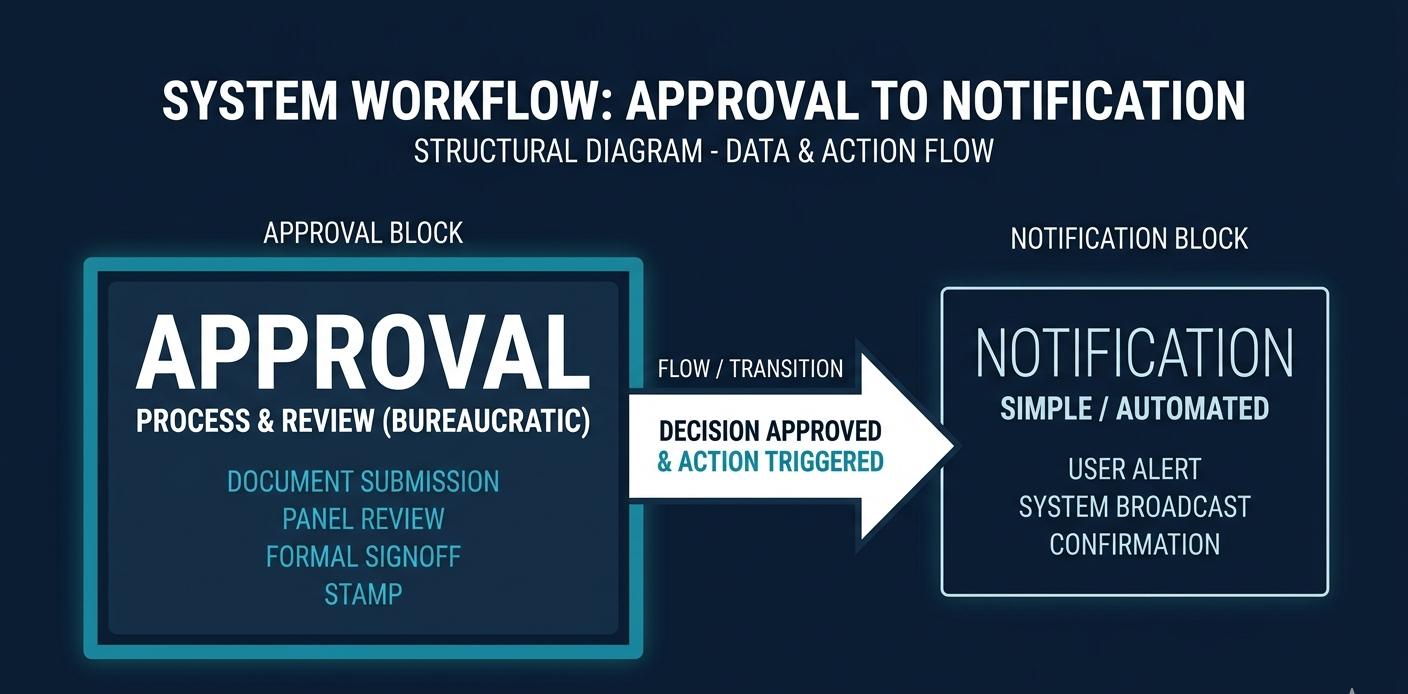
What this means practically: The repatriation approval chain was already being simplified before this budget. The FITTA amendment announced in §10(b) is the next — and most significant — step: replacing the approval requirement entirely with a notification regime.
What "Notification Sufficient" Actually Changes
The shift from approval to notification is not cosmetic. It changes three things that matter operationally for foreign capital:
1. Timing Certainty
Under an approval regime, even if approval is typically granted, the timeline is uncertain. A fund manager modelling returns for an LP presentation cannot confidently commit to a repatriation schedule when the timeline depends on regulatory processing that has no hard deadline.
Under a notification regime, the investor notifies the relevant authority and proceeds. Timing is within the investor's control, not the regulator's calendar.
For PE/VC funds with fixed fund lives and LP distribution obligations, this is a structural improvement — not a marginal one.
2. Transaction Cost Reduction
The approval process requires documentation packages, legal counsel coordination, and often in-person filings. For larger funds making multiple portfolio company distributions across a fiscal year, this multiplies. A notification regime significantly reduces the per-transaction compliance cost.
3. Dispute Resolution Posture
Under an approval regime, a regulator that withholds or delays approval holds procedural leverage even when the investment is legally compliant. A notification regime shifts the burden: the regulator must demonstrate a reason to block a notified transaction rather than the investor demonstrating grounds to permit one. This is a meaningful reversal of default posture.
What Is New and Genuinely Significant
Beyond the repatriation notification reform, the budget's FITTA amendment contains two provisions receiving insufficient attention:
Convertible Instruments and Hybrid Structures Are Now Covered
"Foreign investment coverage will be extended to convertible instruments, project-linked funding, and other hybrid instruments." — Budget §10(b)
This is significant. Under the current FITTA framework, "foreign investment" is defined in ways that created legal ambiguity around:
- SAFE notes (Simple Agreement for Future Equity) widely used in early-stage international VC
- Convertible debt instruments used by DFIs and development finance institutions as mezzanine capital
- Project-linked financing structures where returns are tied to project cashflows rather than equity ownership percentages
Developers and fund managers structuring Nepal entries have historically been forced into clean equity or clean debt structures because hybrid instruments existed in a legal grey zone. The explicit extension of FITTA coverage to these instruments removes that ambiguity — on paper.
Outward Investment Liberalisation for Nepali Entities
§10(b) also notes that legal provisions will be simplified for Nepali citizens and entities to invest abroad. Combined with the NRB's Fifth Amendment (December 2025), this begins to open Nepal's capital account in both directions — inward and outward.
For project developers and PE/VC fund managers with regional portfolio strategies, this matters: Nepali co-investors and domestic fund managers can increasingly participate in regional structures without running into one-directional capital account constraints.
The Candid Assessment: Where the Risk Lives
The FITTA amendment as announced in the budget speech is an intent. What becomes law is the text of the amendment bill. What becomes practice is the NRB directive that implements the amendment. These are three different documents on three different timelines.
Nepal's track record on this specific sequence is instructive. The FITTA 2075 (2019) Act passed Parliament and was hailed as a significant liberalisation. The implementing regulations and NRB directives took 18+ months to fully publish and operationalise. During that period, the gap between statutory right and operational reality frustrated investors who had relied on the announcement.
Four specific risks to monitor:
| Risk | What to Watch |
|---|---|
| Amendment bill language | Does the bill text implement "notification sufficient" cleanly, or does it introduce conditions that re-create approval requirements under different terminology? |
| NRB directive timeline | When does NRB publish the implementing circular? Until then, commercial banks will continue applying the existing approval-based process. |
| Convertible instrument definition | How broadly does the amendment define convertible instruments? A narrow definition could exclude structures that practitioners assume are covered. |
| Sectoral carve-outs | Are any sectors — financial services, media, real estate — exempted from the notification regime? Carve-outs in implementing regulations have historically narrowed the effective scope of FITTA liberalisation. |
What This Means for Transactions Being Structured Now
For PE/VC funds and DFIs currently in diligence or structuring negotiations for Nepal investments, three practical positions:
1. Do not restructure transaction documents yet. The notification regime does not exist until the amendment bill passes and NRB directives are published. Transactions closing in FY 2083/84 Q1–Q2 will still operate under the current approval framework. Build approval timelines into your models.
2. Do flag the convertible instrument coverage for future rounds. If you are investing via convertible notes or SAFE structures, the current FITTA ambiguity remains until the amendment is enacted. For current transactions, get explicit legal opinion on instrument classification under existing law.
3. Watch the NRB circular, not the Parliamentary passage. Parliamentary passage of the FITTA amendment is a necessary but not sufficient condition. The NRB circular implementing the "notification sufficient" regime — which will specify the notification format, reporting obligation, and any conditional provisions — is the document that changes day-to-day practice. Monitor NRB gazettes from Shrawan 2083 onward.
The Bigger Picture
Nepal's FITTA reform trajectory over the last five years has been directionally consistent: from a high-friction approval regime toward a supervision-based framework where capital flows freely and the regulator intervenes on identified concerns rather than pre-approving every transaction.
The FY 2083/84 budget's FITTA amendment is the most ambitious step in that trajectory. If the amendment bill text is clean, the NRB directive is published on time, and the convertible instrument coverage is broad, Nepal's foreign investment legal architecture will be meaningfully more competitive than it was twelve months ago.
That is a credible and achievable outcome. It requires the government to maintain execution discipline through a legislative and regulatory process that historically takes longer than announced.
The direction is right. The timeline is the variable.
Silicon Himalayas provides regulatory compliance advisory and SPV structuring services for foreign investors and project developers operating in Nepal.
Explore our Regtech & Compliance services → Read more Insights →
This article is for informational purposes only and does not constitute legal or investment advice. Readers should seek independent legal counsel for transaction-specific guidance.